How to ensure fire safety in schools?
Introduction to Ensure Fire Safety in Schools:
Ensuring the safety of our children while they are at school is a top priority for parents, educators, and communities alike. One of the critical aspects of school safety is fire safety. Schools must be prepared to prevent fires and respond effectively if one occurs. But how do we make sure our schools are truly fire-safe? Let’s explore the essential steps and strategies for ensuring fire safety in schools.
Understanding the Importance of Fire Safety in Schools:
Why is fire safety so crucial in schools? Imagine a busy school day with hundreds of students and staff bustling about. A fire breaking out in such an environment can lead to chaos and potential tragedy. Ensuring fire safety in schools protects lives, minimizes damage, and creates a safe learning environment. It’s not just about having fire alarms and extinguishers; it’s about a comprehensive approach to prevent, prepare for, and respond to fires.
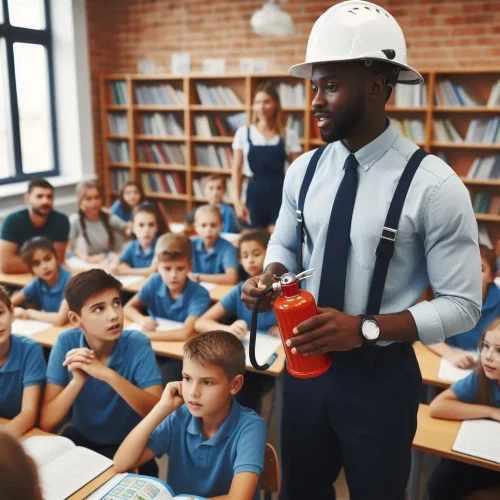
Developing a Comprehensive Fire Safety Plan for Fire Safety in Schools:
A well-structured fire safety plan is the backbone of a fire-safe school. This plan should outline the procedures for preventing fires, steps to take during a fire, and methods for evacuation. It should be tailored to the specific layout and needs of the school. Regular reviews and updates to this plan ensure it remains effective and relevant.
You can have Guidelines for Fire Safety in Schools by Government of India.
Key Elements Plan for Fire Safety in Schools:
- Prevention Strategies: Identifying potential fire hazards and implementing measures to reduce risks.
- Emergency Procedures: Clear instructions on what to do in the event of a fire.
- Evacuation Routes: Well-marked and accessible escape routes for all areas of the school.
- Communication Plan: How to alert staff, students, and emergency services in case of a fire.
Regular Fire Drills and Evacuation Procedures:
Practice makes perfect, and this is especially true for fire safety. Regular fire drills help ensure that everyone in the school knows exactly what to do when the fire alarm sounds. These drills should be conducted at different times and under various conditions to simulate real-life scenarios.
Benefits of Regular Fire Drills in Schools:
- Familiarity: Helps students and staff become familiar with evacuation routes.
- Efficiency: Reduces confusion and panic during an actual fire.
- Preparedness: Ensures everyone knows their role and responsibilities.
Proper Installation and Maintenance of Fire Safety Equipment:
Fire safety equipment, such as alarms, extinguishers, and sprinkler systems, are critical components of a fire-safe school. However, merely having this equipment is not enough; it must be properly installed and regularly maintained. Ensuring proper installation and maintenance of fire safety equipment ensure fire safety in schools.
Essential Fire Safety Equipment:
- Fire Alarms: Should be installed throughout the school and regularly tested.
- Fire Extinguishers: Must be easily accessible and staff should be trained on how to use them.
- Sprinkler Systems: Provide an automatic response to fires, helping to control and extinguish them.
Fire Safety Training for Staff and Students:
Knowledge is power, especially when it comes to fire safety. Regular training sessions should be conducted to educate staff and students on fire prevention, the proper use of fire safety equipment, and evacuation procedures.
Know more about Types of Fires / Class of Fires& How to choose perfect fire extinguishers.
Components of Effective Fire Safety Training:
- Fire Prevention: Teaching staff and students how to identify and eliminate fire hazards.
- Emergency Response: Training on how to respond quickly and effectively to a fire.
- Equipment Usage: Demonstrations on how to use fire extinguishers and other safety equipment.
Identifying and Mitigating Fire Hazards:
A proactive approach to fire safety involves regularly inspecting the school to identify potential fire hazards. Once identified, these hazards must be mitigated to reduce the risk of fire.
Common Fire Hazards in Schools:
- Electrical Hazards: Faulty wiring, overloaded outlets, and malfunctioning equipment.
- Flammable Materials: Proper storage and handling of flammable substances.
- Blocked Exits: Ensuring all exits are unobstructed and easily accessible.
Creating Fire Safety Awareness Programs:
Raising awareness about fire safety is crucial. Schools can create programs and campaigns to educate the school community about the importance of fire safety and what they can do to help.
Strategies for Raising Awareness:
- Posters and Signage: Placing fire safety posters and signs throughout the school.
- Workshops: Hosting workshops and seminars on fire safety topics.
- Communication: Regularly sharing fire safety tips and information through newsletters and social media.
Effective Communication During Fire Emergencies:
Clear and effective communication can make a significant difference during a fire emergency. Schools should have a communication plan in place to quickly and accurately disseminate information to staff, students, and emergency services.
Components of a Communication Plan:
- Alarm Systems: Ensuring fire alarms are loud and distinct.
- Public Address Systems: Using PA systems to give clear instructions during an evacuation.
- Emergency Contacts: Maintaining an up-to-date list of emergency contacts.
Incorporating Technology in Fire Safety:
Advancements in technology offer new tools and methods for enhancing fire safety in schools. From smart alarms to digital evacuation maps, technology can improve both prevention and response.
Technological Innovations in Fire Safety:
- Smart Alarms: Systems that provide real-time alerts and data.
- Digital Maps: Interactive maps that show evacuation routes and hazards.
- Monitoring Systems: Using cameras and sensors to detect fires early.
Collaboration with Local Fire Departments:
Local fire departments are invaluable partners in ensuring fire safety in schools. Regular collaboration can provide schools with expert advice, resources, and support during emergencies.
Benefits of Collaboration for Fire Safety in Schools:
- Expertise: Access to fire safety experts who can assist with planning and training.
- Resources: Availability of additional resources and equipment.
- Support: Immediate assistance during a fire emergency.
Regular Fire Safety Audits and Inspections for Fire Safety in Schools:
To ensure ongoing fire safety, schools should conduct regular audits and inspections. These evaluations help identify areas for improvement and ensure compliance with fire safety regulations.
Conducting Effective Audits for Fire Safety in Schools:
- Scheduled Inspections: Regularly scheduled checks of all fire safety systems and equipment.
- Compliance Checks: Ensuring all fire safety measures meet legal standards.
- Reporting: Documenting findings and taking corrective action as needed.
Integrating Fire Safety in School Curriculum:
Educating students about fire safety can be an integral part of their education. Integrating fire safety into the school curriculum ensures that students learn important safety skills from a young age.
Curriculum Integration Ideas:
- Fire Safety Lessons: Incorporating lessons on fire safety into science and health classes.
- Interactive Activities: Engaging students with fire safety drills and role-playing exercises.
- Projects: Assigning projects that involve researching and presenting on fire safety topics.
Coming to Conclusion:
Ensuring fire safety in schools is a multifaceted effort that requires planning, training, and collaboration. By implementing a comprehensive fire safety plan, conducting regular drills, maintaining equipment, and educating the school community, we can create a safe environment for our children to learn and grow.
Frequently Asked Questions and Answers on Fire Safety in Schools:
1. What are the key components of a school fire safety plan?
A school fire safety plan should include prevention strategies, emergency procedures, evacuation routes, and a communication plan.
2. How often should fire drills be conducted in schools?
Fire drills should be conducted regularly, ideally multiple times a year, to ensure everyone is familiar with evacuation procedures.
3. What role do local fire departments play in school fire safety?
Local fire departments provide expertise, resources, and support, including assistance with planning, training, and emergency response.
4. How can technology enhance fire safety in schools?
Technology can enhance fire safety through smart alarms, digital evacuation maps, and monitoring systems that detect fires early and provide real-time data.
5. Why is it important to integrate fire safety into the school curriculum?
Integrating fire safety into the curriculum educates students on important safety skills, promoting a culture of awareness and preparedness from a young age.
6. How can schools identify potential fire hazards?
Schools can identify potential fire hazards through regular inspections, maintenance of electrical systems, proper storage of flammable materials, and ensuring that all exits are unobstructed.
7. What should students do if they discover a fire?
Students should immediately inform a teacher or staff member, follow the school’s fire emergency procedures, and evacuate the building calmly and quickly using the designated routes.
8. How can parents contribute to fire safety in schools?
Parents can contribute by educating their children about fire safety, participating in school fire safety programs, and supporting the school’s efforts to maintain a safe environment.
9. What are the most common causes of school fires?
The most common causes of school fires include electrical issues, kitchen fires, improper handling of flammable materials, and arson.
10. How can schools ensure their fire safety equipment is functional?
Schools can ensure their fire safety equipment is functional by conducting regular maintenance checks, testing alarms and sprinklers, and ensuring fire extinguishers are easily accessible and properly charged.
Originally published on Mobile Foam Unit.

Our Products
Address Location
- 45, Fortune North Industrial Park, B/H Gamthi Hotel, Nr. Nana chiloda circle, S P Ring road, Naroda, Ahmedabad - 382330
- +91-8141899444, +91-9624096894
- info@kindefire.co.in

Copyright © 2026 iThing Mechatronics LLP. Designed By Ad Dream Universe.